Call Tracker
See what makes your phone ring.
Every call tied back to the campaign, keyword, and ad that drove it. Call recording, SMS, and real time reporting included.
Unlimited users. No contracts.
How Call Tracking Helps Small Agencies Compete With Big Ones
You can run a client’s campaigns as well as an agency ten times your size and still lose the renewal, because the bigger shop turned up with a dashboard and a monthly report. For local clients you can close that gap. Their leads arrive by phone, and call tracking lets you show which campaign made it ring, in a report with your logo on it, for $147 a month across every client you have.
Here is what to set up for each client, what to put in the report, and what it costs. We make call tracking software, so weigh the product parts with that in mind.
Small Agencies Lose Renewals on Reporting
Clients cancel when they cannot see what the retainer bought. For a plumber, a dentist or a law firm, most of what it bought is phone calls, and phone calls are the one thing their analytics leaves out.
Website visits, ad clicks and form fills all show up. The call that booked the job does not. So the report you send each month is missing the part your client cares about most, and the agency with the bigger reporting budget starts to look like the safer choice.

Give Every Client Campaign Its Own Number
Put a different tracking number on each campaign you run for a client: one on the Google Business Profile, one on the postcard, one on the truck wrap. Every call to that number came from that campaign. These are offline trackers, and there is nothing to install.
The client’s website needs a different approach, because one number cannot tell a Google Ads visitor from an organic one. Dynamic number insertion swaps the number on the page for each visitor, so a call from the site carries its channel, its landing page and, for paid search, the Google Ads keyword. The same integration sends those calls back to Google as conversions, so your bidding improves along with your report.
The renewal meeting changes once this is running. “We think SEO is working” becomes “SEO drove 43 calls this month, and 31 were new customers.”

Report New Customers, Not Call Counts
A raw call count invites the obvious objection: half of those were existing patients rescheduling. Answer it before it is asked. Every call is flagged as a first-time caller or a repeat one, so the report can show new callers on their own. Duration is logged too, which separates a four minute booking from a ten second wrong number.
For the calls that matter, bring the evidence. Call recording is set once on the tracker, and AI transcription turns each call into a conversation you can read in seconds. In the review panel you can tag a call as a booked job and put a value on it without leaving the list. When a caller says “I found you on Google”, you can quote it in the next client review.
The same flags are what a pay per call agreement bills on. If you want to charge a client per qualified call instead of a retainer, our guide to pay per call marketing covers the terms.

Put Your Own Brand on the Platform
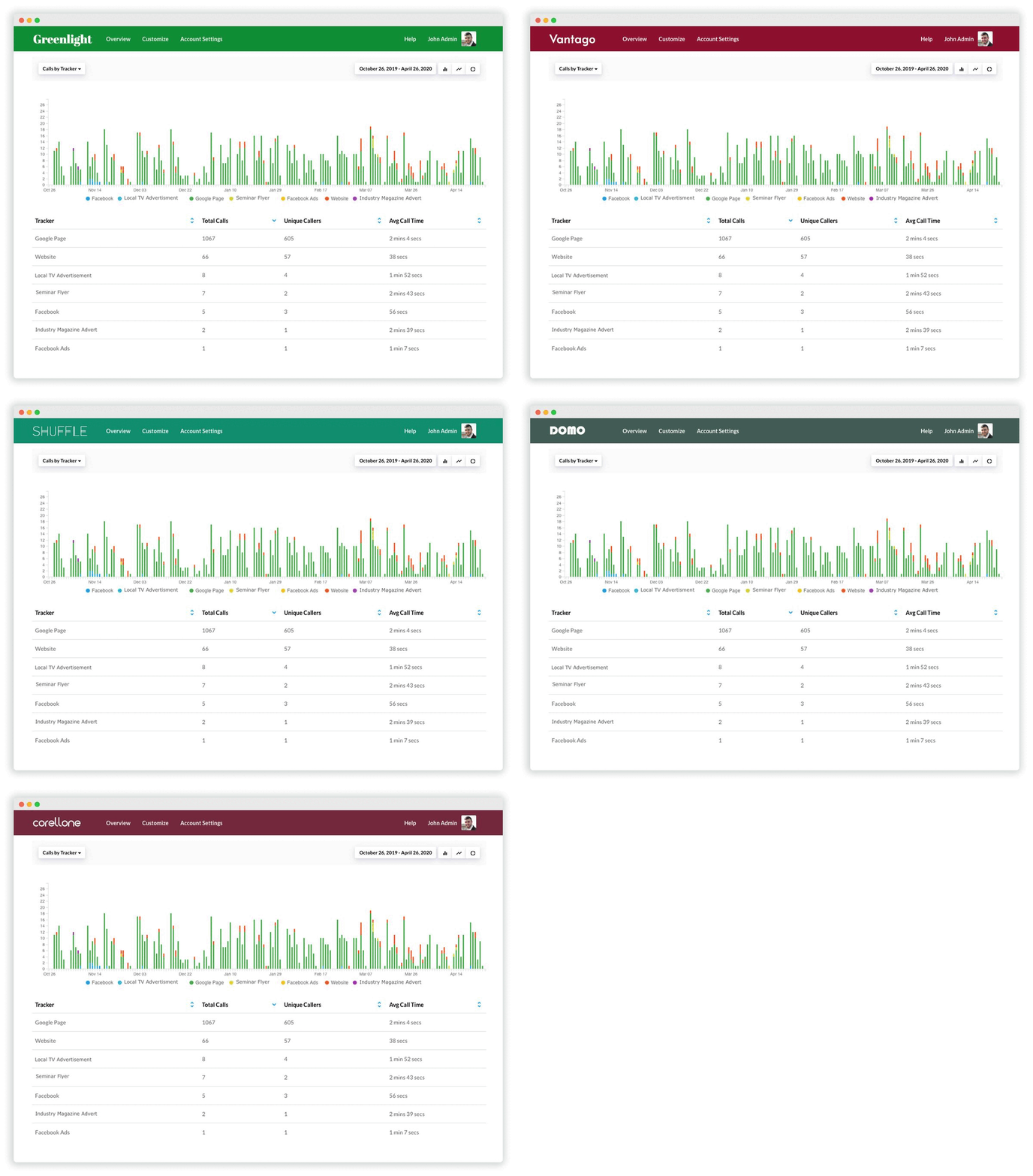
A client who signs in to a tool with someone else’s logo on it knows you are reselling. White label call tracking, on the Agency plan, puts the app under your brand instead:
- Your domain. The app is served from your own address, such as calls.youragency.com.
- Your logo and colours. They appear on the login page, the app header and the buttons.
- Your name on the emails. Call notifications and summary reports arrive under your brand.
- Your support address. Emails to your clients' users point back to you.
The client signs in on your domain and sees your product. Below is one client report under five different agency brands.
Run Every Client From One Account
Each client is a company inside your account, with its own numbers, call log and reports, so one client’s data never appears in another’s. Clients you invite as users see only their own company. Users are unlimited on every plan, so you can add every account manager and every client contact at no cost per seat.
Adding the next client takes a few steps, and their usage is listed per company. If you pass call tracking through to clients as a line item, the figure for each one is already separated.

Send the Report Before the Client Asks
The report that keeps a client is the one that arrives on its own. Scheduled summary reports go out daily, weekly or monthly to whoever you choose, at around 8am in the company’s timezone. The weekly one lands every Monday and the monthly one on the first.
Each email shows total calls, average call time and total messages for the period, then the calls for each tracker with unique callers. On the Agency plan it carries your branding. The client reads their numbers every Monday with your logo above them, which does more for a renewal than a slide deck once a quarter.

Bring Call Data to the Pitch
Most small business owners have never seen their calls tied to their marketing. Be the agency that shows them first. You can do it before they sign, without access to any of their accounts.
Offer to put one tracking number on the prospect’s busiest campaign for a month. At the end you can show how many calls it produced, how many were new callers, and how many nobody answered. That last figure tends to get attention: across the calls we track, about 16% go unanswered. Our post on tracking missed calls covers how to find and fix them.

What White Label Call Tracking Costs
White label is where the larger platforms charge agencies the most. These are the published prices we found when we reviewed each provider:
| Provider | White label | Multi-client pricing |
|---|---|---|
| Call Tracker | Included in the Agency plan | $147 a month, unlimited client companies |
| WhatConverts | $50 a month add-on | Agency plans from $500 a month |
| CallTrackingMetrics | From the $179 Marketing Pro tier | Sub-accounts at that tier |
| CallRail | Not listed in its public plans | Not listed |
The detail is in our WhatConverts pricing breakdown and our CallRail and CallTrackingMetrics comparison.
Call Tracker’s Agency plan is $147 a month. It includes white label, unlimited client companies, unlimited users, 40 local numbers and 1,500 local minutes, with pay as you go usage above that. Ten clients with four numbers each fit inside the included 40, which works out to $14.70 a client before any extra usage.
See the full pricing, or the page on call tracking for agencies.
Frequently Asked Questions
How does call tracking help a marketing agency keep clients?
It shows the client which campaigns made their phone ring. Each campaign has its own number, website calls are attributed by dynamic number insertion, and new callers are reported separately from repeat ones.
Can an agency white label call tracking?
Yes. On the Agency plan the app runs on your own domain with your logo and colours, and call notifications and summary reports arrive under your brand.
How much does call tracking cost for an agency?
The Agency plan is $147 a month. It includes white label, unlimited client companies, unlimited users, 40 local numbers and 1,500 local minutes.
Start With One Client This Week
Pick the client whose renewal is closest. Put a tracking number on their busiest campaign and add dynamic number insertion to their site. At the next review you will have a count of calls by campaign, with new callers separated out, under your own logo. Start a 14 day free trial of Call Tracker. There are no contracts, and every plan has unlimited users.

Alex Phelps
Published on