Call Tracking for HVAC
HVAC is brutally seasonal and the ad spend is expensive. When a heat wave triggers a flood of no-AC calls, Call Tracker shows you the exact campaign behind the spike so you scale what works and stop wasting peak-season budget.
14 Day Risk Free Trial with Every Plan
- Plans from $37/mo
- No commitment, cancel anytime
Why call tracking for HVAC Services
Attribute every peak-season call spike
When a heat wave or cold snap drives a flood of calls, a unique tracking number on each campaign ties the spike back to the exact ad, keyword, or listing. You know which channel to scale before the season ends, not after.
Separate installs from repairs and plans
Call recording and AI transcripts tell a high-ticket install lead from a repair call or a maintenance-plan signup, so you measure cost per booked install versus cost per repair and bid accordingly.
Never miss a no-AC emergency
Call flows route no-heat and no-AC emergencies to your on-call tech and forward to a backup, while missed-call alerts fire instantly. During peak demand, every unanswered call is a booked job handed to a competitor.
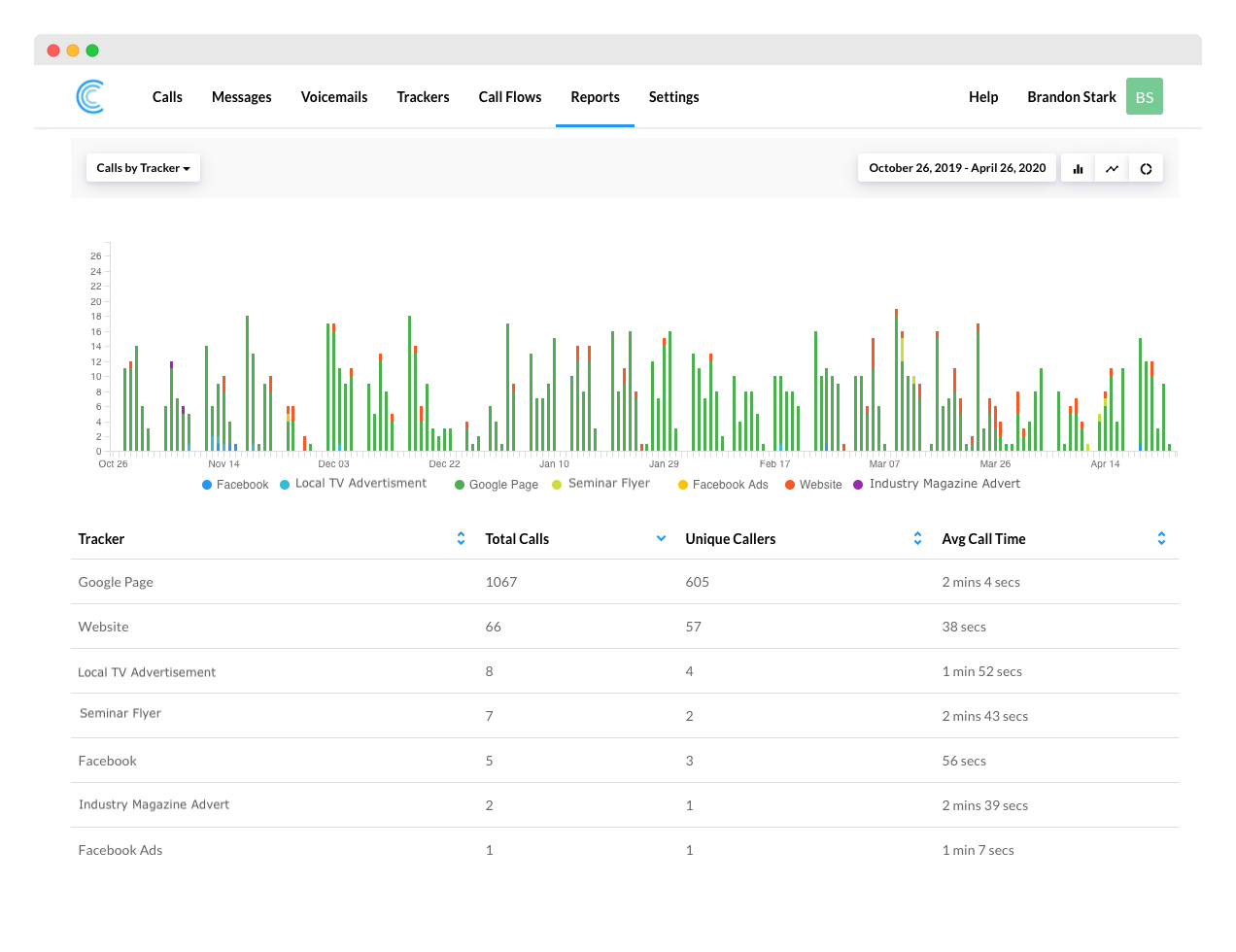
See where every call comes from
Each tracking number reports its calls, unique callers and average call time, so you know which source is worth the spend.
Call tracking built for HVAC Services
HVAC lives and dies by the season. A heat wave triggers a wall of no-AC calls in a single afternoon, a cold snap does the same in winter, and the ad spend behind those calls is some of the most expensive in home services. That makes call tracking for HVAC companies the difference between a profitable season and a wasted one, because if you cannot see which campaign drove the spike, you cannot scale it in time. Here is how Call Tracker is built for the way HVAC businesses really work.
Attribute the call spike while you can still act on it
Put a unique tracking number on each channel, your Google Ads, your Local Services Ads, your Google Business Profile, your truck wraps, and dynamic number insertion swaps the number on your site by traffic source. When demand spikes, every call is logged against the ad, keyword, or listing that produced it, so you scale the winning campaign during the season instead of guessing after it ends.
Separate installs from repairs and maintenance plans
A new system install and a capacitor swap are not the same lead, and a maintenance-plan signup is different again. Call recording and AI call transcriptions let you tag each call type, then real-time call analytics turn that into cost per booked install versus cost per repair by channel. When your PPC is this expensive, that split is where the real bidding decisions live.
Never miss a no-AC or no-heat call
At the height of a heat wave, a call to voicemail is a job booked by the next company on the list. Call flows ring your on-call tech, hunt across multiple phones, and forward to a backup, while instant email alerts fire on every missed call so nothing slips during a volume surge. In HVAC, answer speed during peak demand is a marketing channel.
Know your true cost per booked install by channel
With expensive ad spend, the headline metric is not call volume, it is what each channel costs per booked install. Per-source numbers and analytics show that number across Google Ads and local SEO, so you move budget to the channels that book high-ticket systems and away from the ones that only bring price-shoppers. For agencies running HVAC clients, white-label call tracking puts all of it under your brand with unlimited users.
Start tracking your HVAC calls
Get thousands of local and toll-free numbers across 300+ US and Canada area codes, with recording, routing, and analytics on every plan from $37 a month. Want the strategy side too? Read the HVAC marketing guide.
Frequently Asked Questions
Does Call Tracker work for HVAC companies?
Yes. HVAC is phone-driven, seasonal, and ad-heavy, and Call Tracker gives each marketing source its own number so every call is tied to the campaign that produced it, with recording, after-hours routing, and real-time analytics built in.
How much is call tracking for an HVAC company?
Plans start at $37 a month (Starter) with 10 tracking numbers and 500 minutes included, unlimited users, and a 14-day free trial. A credit card is required to start the trial. See pricing for Pro and Agency plans.
Can I see which ads bring in HVAC installs versus repairs?
Yes. With dynamic number insertion and per-source numbers, Call Tracker attributes each call to the exact ad or keyword, and recording plus transcripts let you tag installs versus repairs so you compare cost per booked install across Google Ads and local SEO.
Can it handle the call spikes during a heat wave?
Yes. Call flows hunt across multiple phones and forward to backups so peak-season volume gets answered, and per-source analytics show which campaign drove the spike so you scale it while demand is hot.
See what drives your calls
Want the full playbook on getting more calls? Read the HVAC Marketing guide.