Call Tracking for Fire Damage Restoration
Fire restoration is a 24/7 emergency business where the first company to answer wins the job. Call Tracker ties each emergency call to the ad, listing, or keyword that drove it, and routes 2am calls straight to your on-call crew so you never miss a high-ticket loss.
14 Day Risk Free Trial with Every Plan
- Plans from $37/mo
- No commitment, cancel anytime
Why call tracking for Fire Damage Restoration
Attribute every emergency call
Every fire restoration job starts with a phone call, so a unique tracking number on each ad, map listing, and keyword ties the job back to the source that produced it. No more guessing where your most expensive leads come from.
Never miss a 2am fire call
Call flows ring your on-call crew, hunt across phones, and forward to a backup, while instant missed-call email alerts ping you the moment a call slips through. A displaced homeowner books whoever answers first, so you do.
Qualify and value large losses
Call recording and AI transcripts capture the insurance carrier, loss details, and scope from the first call, so you can tell a full structure loss from a small smoke cleanup and route your best crews to the jobs that pay.
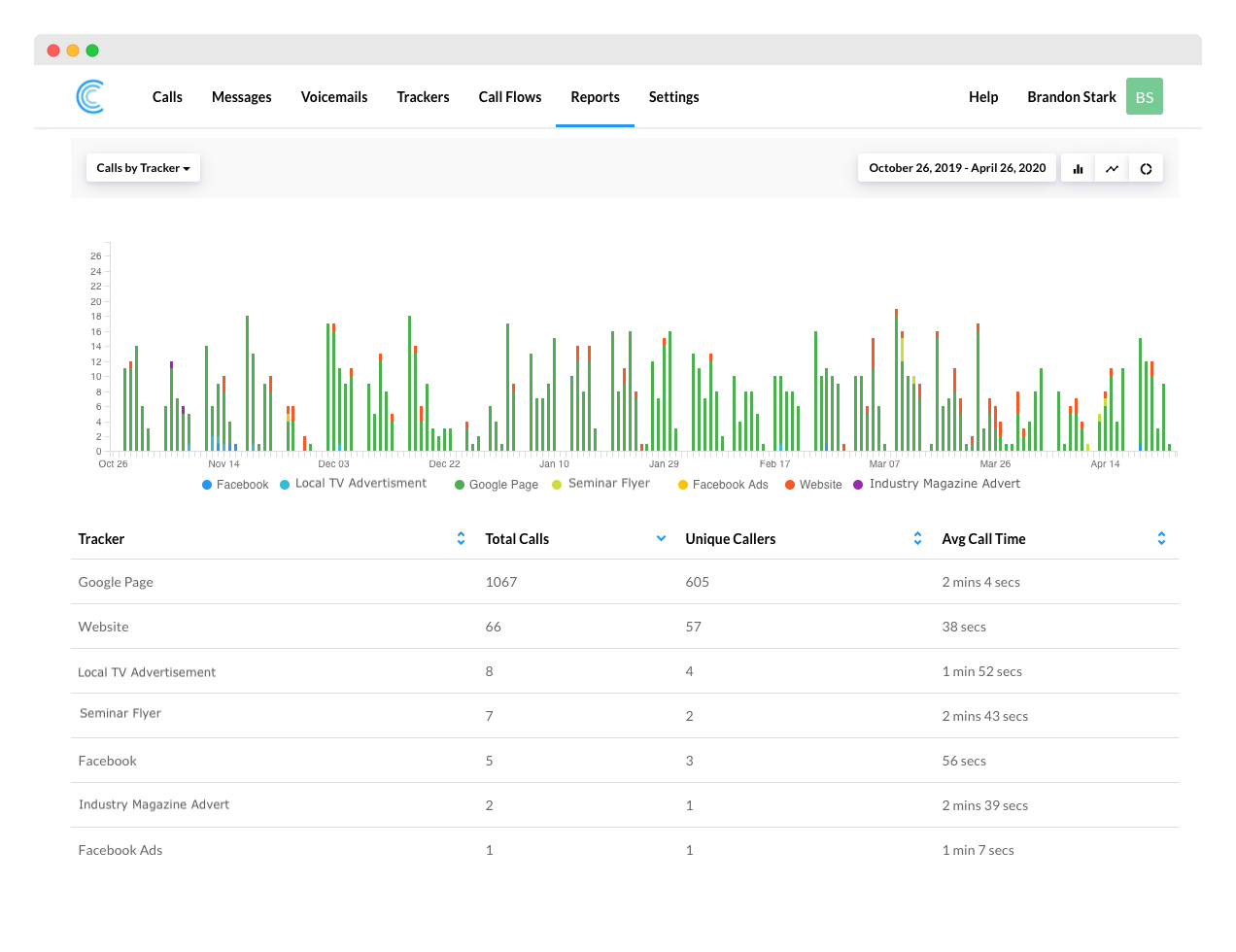
See where every call comes from
Each tracking number reports its calls, unique callers and average call time, so you know which source is worth the spend.
Call tracking built for Fire Damage Restoration
Fire restoration runs on the phone, and it runs at all hours. A homeowner standing outside a smoking house does not fill out a form, they call down the search results until someone picks up, and board-up and mitigation have to start within hours. That makes call tracking for fire damage restoration less of a nice-to-have and more of the only honest way to know which marketing actually fills your schedule with high-ticket jobs. Here is how Call Tracker is built for the way restoration businesses really work.
Tie every restoration job to the source that drove it
Put a unique tracking number on each channel, your Google Business Profile, your Google Ads, your Local Services Ads, and dynamic number insertion swaps the number on your website by traffic source. Every emergency call is logged against the ad, keyword, or listing that produced it, so when leads are this expensive you stop guessing and start counting which sources actually book jobs.
Never miss a 2am fire call
A call to voicemail is a high-ticket loss handed to the next company on the list. Call flows ring your on-call crew, hunt across multiple phones, and forward to a backup after hours, while instant email alerts ping you on every missed call so you can ring back before the displaced homeowner books someone else. In fire restoration, answer speed is a marketing channel.
Qualify large losses and capture claim details
Not every call is a full structure fire, and the big insurance jobs are the ones worth protecting. Call recording and AI call transcriptions capture the insurance carrier, the loss details, and the scope from the first conversation, so you can tell a major restoration job from a small smoke-odor cleanup and put your best crews and fastest follow-up where the value is.
Measure cost per booked job by channel
Volume is not the goal, booked losses are. Real-time call analytics turn your tracked calls into cost per booked job by channel, so you can see whether Google Ads, local SEO, or a lead broker produces your restoration work most cheaply, then move budget to whatever wins. For agencies and franchises running multiple restoration clients or locations, white-label call tracking puts all of it under your brand with unlimited users.
Start tracking your restoration calls
Get thousands of local and toll-free numbers across 300+ US and Canada area codes, with recording, routing, and analytics on every plan from $37 a month. Want the strategy side too? Read the fire damage restoration marketing guide.
Frequently Asked Questions
Does Call Tracker work for fire damage restoration companies?
Yes. Fire restoration is a phone-driven, around-the-clock emergency business, and Call Tracker gives each marketing source its own number so every emergency call is tied to the campaign that produced it, with recording, 24/7 routing, and real-time analytics built in.
How much is call tracking for a restoration company?
Plans start at $37 a month (Starter) with 10 tracking numbers and 500 minutes included, unlimited users, and a 14-day free trial. A credit card is required to start the trial. See pricing for Pro and Agency plans.
Will it route emergency fire calls after hours?
Yes. Call flows ring your on-call crew, hunt across multiple phones, and forward to a backup after hours, while instant email alerts fire on every missed call, so a 2am fire loss never goes to voicemail and over to a competitor.
Can I see which ads bring in restoration jobs?
Yes. With dynamic number insertion and per-source numbers, Call Tracker attributes each call to the exact ad, keyword, or listing, so you can compare cost per booked job across Google Ads, local SEO, and any lead brokers you use.
See what drives your calls
Want the full playbook on getting more calls? Read the Fire Damage Restoration Marketing guide.