---
title: "Simultaneous Ring"
description: "Stop missing calls because one phone rang and the one person near it was busy. Ring up to 10 phones at once and connect the caller to whoever answers first."
image: "/assets/images/features/simulring-builder.png"
url: "https://calltracker.io/features/simultaneous-ring/"
---
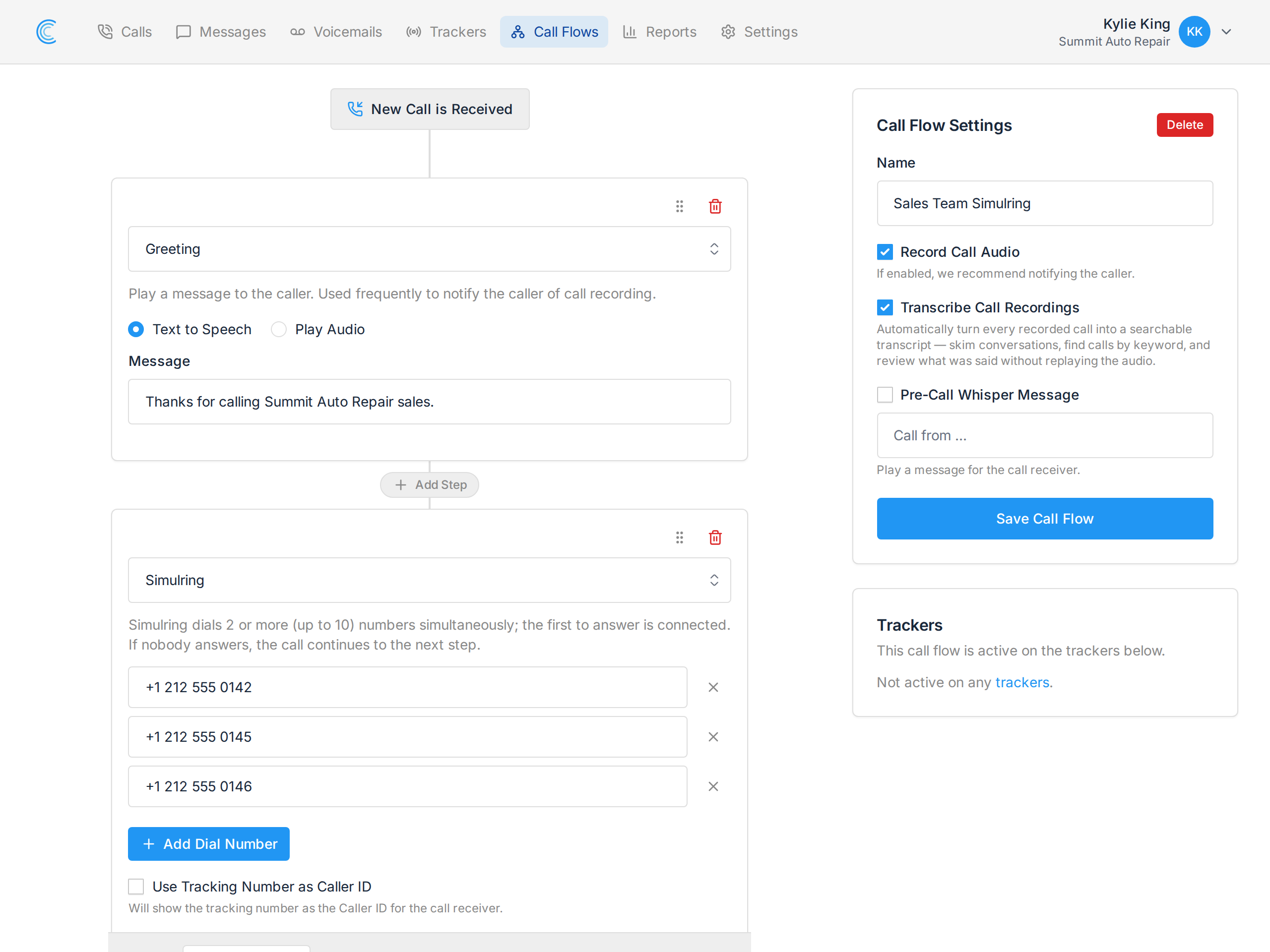
Most missed calls have the same cause. The call rang one phone, the one person near it was on another call or out on a job, and nobody else knew it was ringing. The caller hung up, and a missed call is a lead you already paid for. Simultaneous ring sends the call to several phones at the same time, and whoever picks up first gets the caller, so the lead reaches a person instead of a voicemail. Phone systems call it a ring group or ring all. In Call Tracker it is a Simulring step in a call flow, and it works on any tracking number.
Building a Simultaneous Ring
 ##### What Simultaneous Ring Does for Your Business
- Ring 2 to 10 phones at once, in any mix of office lines, mobiles and direct numbers.
- Connect the caller to the first person to answer, and stop the other phones ringing.
- Set how long the phones ring before the call moves on, so nobody waits on a phone with no one near it.
- Fall through to a voicemail with a transcript when the whole team is busy.
- Keep the same campaign, source and keyword reporting on every call, whichever phone took it.
##### The Caller Waits for the Quickest Person, Not the Slowest
Forwarding down a list makes the caller sit through every phone that does not answer. Ring the office for twenty seconds, then the mobile for twenty, then the owner, and the caller has heard a minute of ringing before anyone picks up. Most of them are gone by then.
Ringing everyone at once means the wait is only as long as it takes the fastest person to answer. A three person team with no receptionist, an owner who is on site half the day, or an after hours rota of on-call mobiles all get the same result: the call reaches a person if one is free, and the people who are busy are not interrupted.
Ring Time and Caller ID
 ##### Two Settings, Then a Voicemail
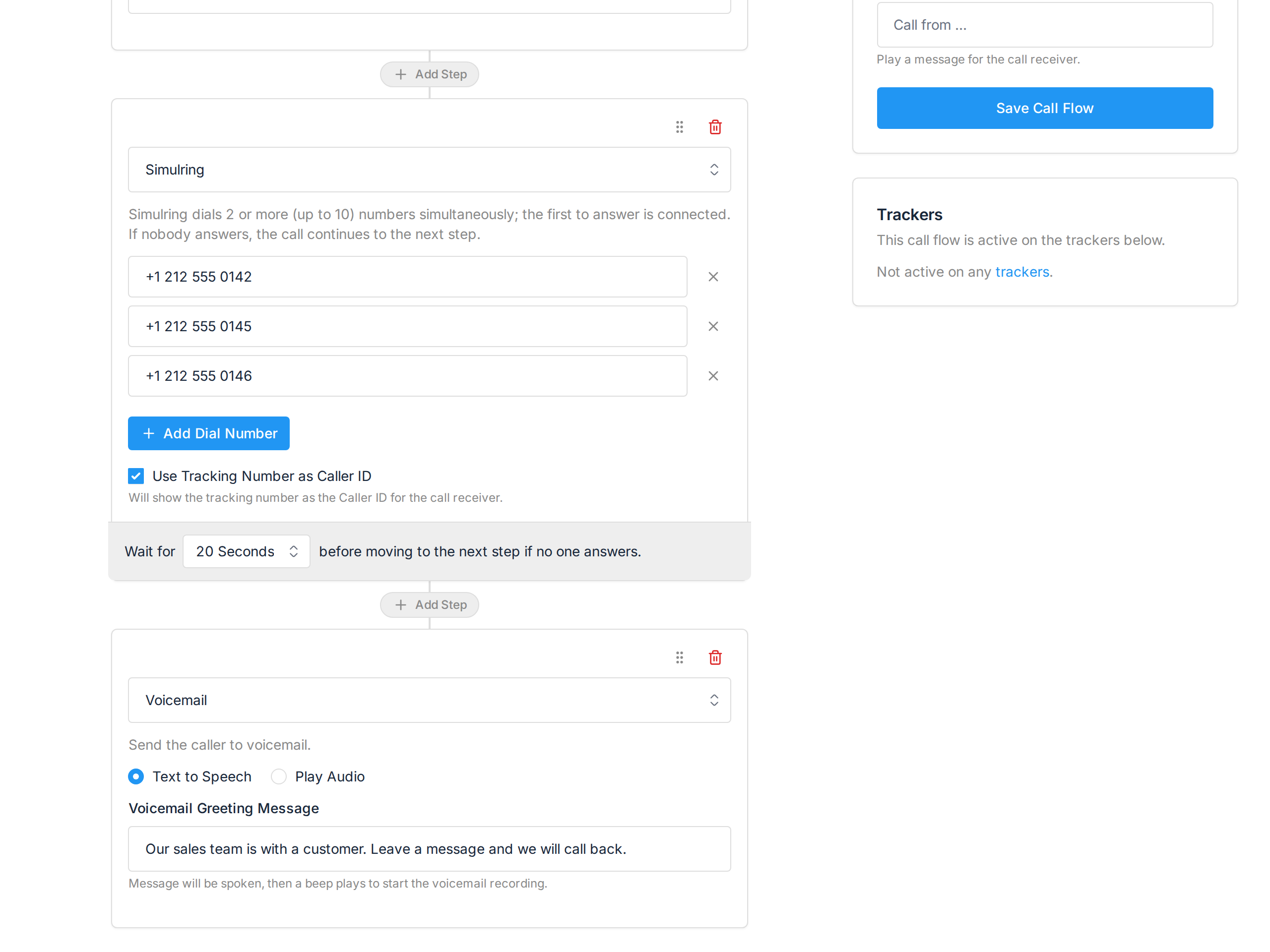
Wait for is how long every phone rings before the call moves to the next step. A ring is about five seconds, so 20 seconds is four rings, which suits most businesses. If nobody answers in that time the call continues, normally to a voicemail step, so a caller who reached nobody still leaves a message you can read.
Use Tracking Number as Caller ID shows the tracking number to whoever answers, so the team knows which campaign produced the call before they say hello. Leave it off to keep the caller's real number on the handset for callbacks, and use a whisper message for the campaign name instead.
##### Works With a Menu
Simultaneous ring answers "anyone in this group can take it". An IVR menu answers "the caller knows who they need". The two combine: a menu option for Sales can lead straight into a simulring across the whole sales team, while Service rings one desk and falls through to its own voicemail.
##### The Calls Still Report Against the Campaign That Earned Them
A simulring step sits inside the call flow, so it never touches attribution. Every call reports against the tracking number that received it, and recording and transcription apply to whichever phone picked up. You get fewer missed calls without giving up anything you could measure before.
Read more about Call Flows and how to set up a Simulring step. See How Simultaneous Ring Works for when to use it over sequential forwarding.
##### Two Settings, Then a Voicemail
Wait for is how long every phone rings before the call moves to the next step. A ring is about five seconds, so 20 seconds is four rings, which suits most businesses. If nobody answers in that time the call continues, normally to a voicemail step, so a caller who reached nobody still leaves a message you can read.
Use Tracking Number as Caller ID shows the tracking number to whoever answers, so the team knows which campaign produced the call before they say hello. Leave it off to keep the caller's real number on the handset for callbacks, and use a whisper message for the campaign name instead.
##### Works With a Menu
Simultaneous ring answers "anyone in this group can take it". An IVR menu answers "the caller knows who they need". The two combine: a menu option for Sales can lead straight into a simulring across the whole sales team, while Service rings one desk and falls through to its own voicemail.
##### The Calls Still Report Against the Campaign That Earned Them
A simulring step sits inside the call flow, so it never touches attribution. Every call reports against the tracking number that received it, and recording and transcription apply to whichever phone picked up. You get fewer missed calls without giving up anything you could measure before.
Read more about Call Flows and how to set up a Simulring step. See How Simultaneous Ring Works for when to use it over sequential forwarding.